Average Pay Is Up 33%. Are We Any Better Off?
A closer look at pay, prices and who actually got ahead since 2019.
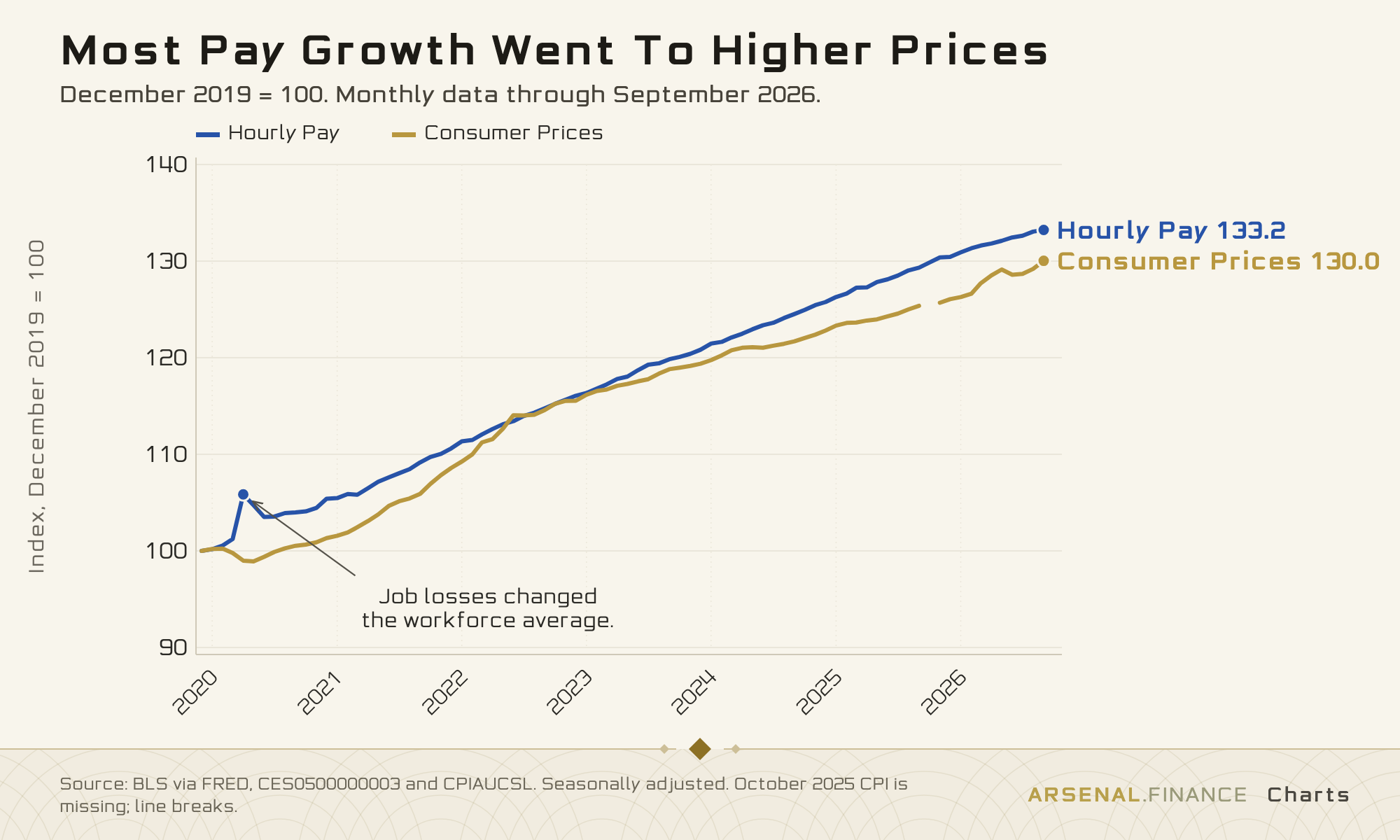
A 33% pay increase sounds great. That’s how much average hourly pay on private payrolls rose from December 2019 to September 2026, going from $28.38 to $37.81. Now put it next to consumer prices:
Prices rose 30.0%. Adjust for inflation and that 33% pay increase shrinks to 2.5%. September’s $37.81 bought what $29.08 bought in December 2019, just 70 cents more than the original hourly wage. Over the latest year, pay actually lost ground: wages rose 3.0%, prices 3.7%.
Notice the jump in 2020. Many lower-paid workers lost their jobs, pushing up the average among those still employed. It didn’t mean everyone got a raise. That’s one reason the average alone doesn’t tell the whole story.
So let’s break it down by the work people do. For the blue collar versus white collar comparison, the chart below uses BLS’s wage and salary index, which keeps the mix of occupations and industries fixed. Benefits are excluded. These quarterly data run through June 2026, the latest available on October 29.
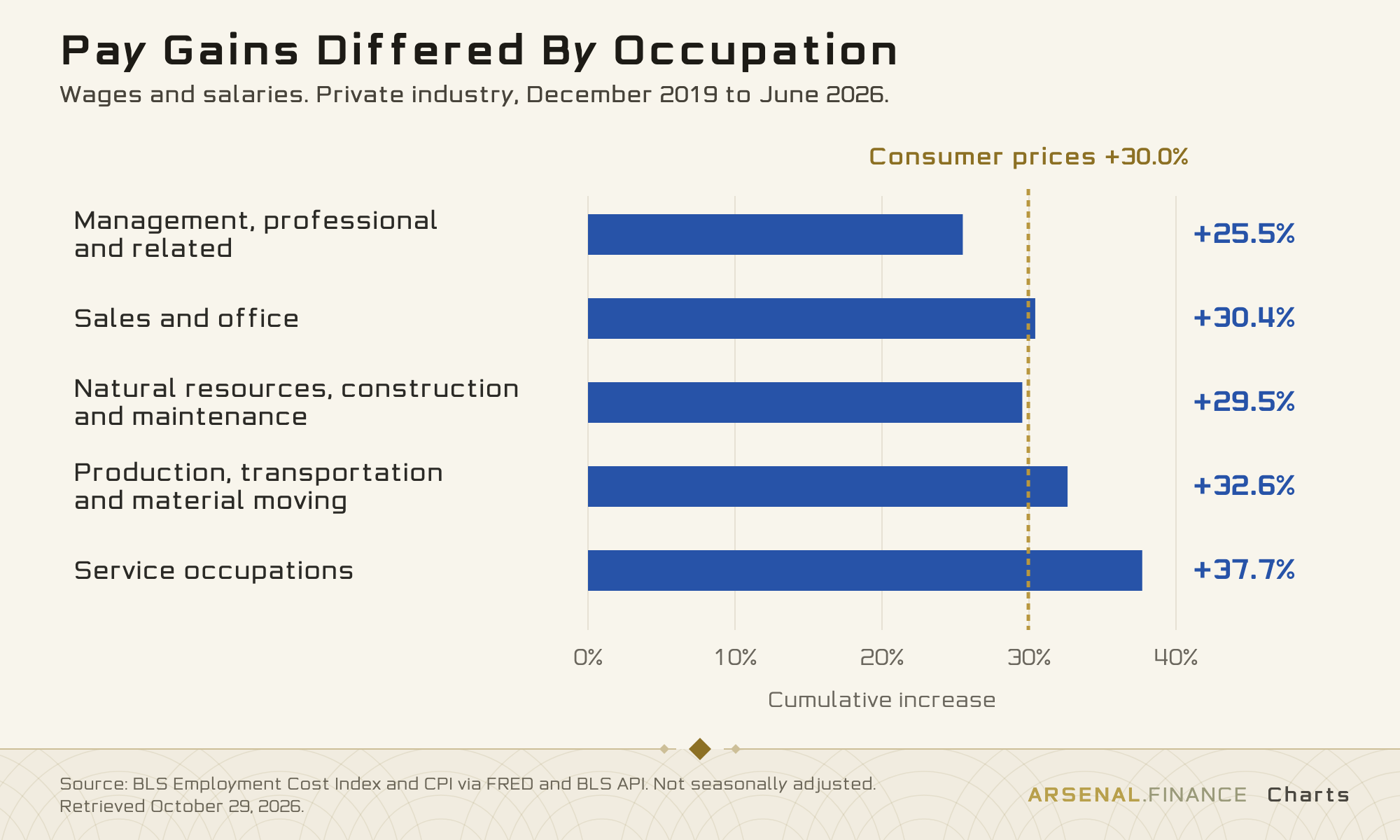
Production and transportation pay rose 32.6%, while management and professional pay rose 25.5%. Against 30.0% inflation over those same dates, that works out to a 2.1% gain in buying power for the first group and a 3.4% loss for the second.
Construction and maintenance, grouped with natural resources, roughly kept up with prices. Service occupations gained the most, at 37.7%. Faster growth doesn’t mean higher salaries, though, or that every worker received that raise.
There’s another part to this: what you spend your money on. Back to the period ending September, groceries rose 32.2% and shelter 34.0% since December 2019. Compare those with the 33.2% increase in average hourly pay:
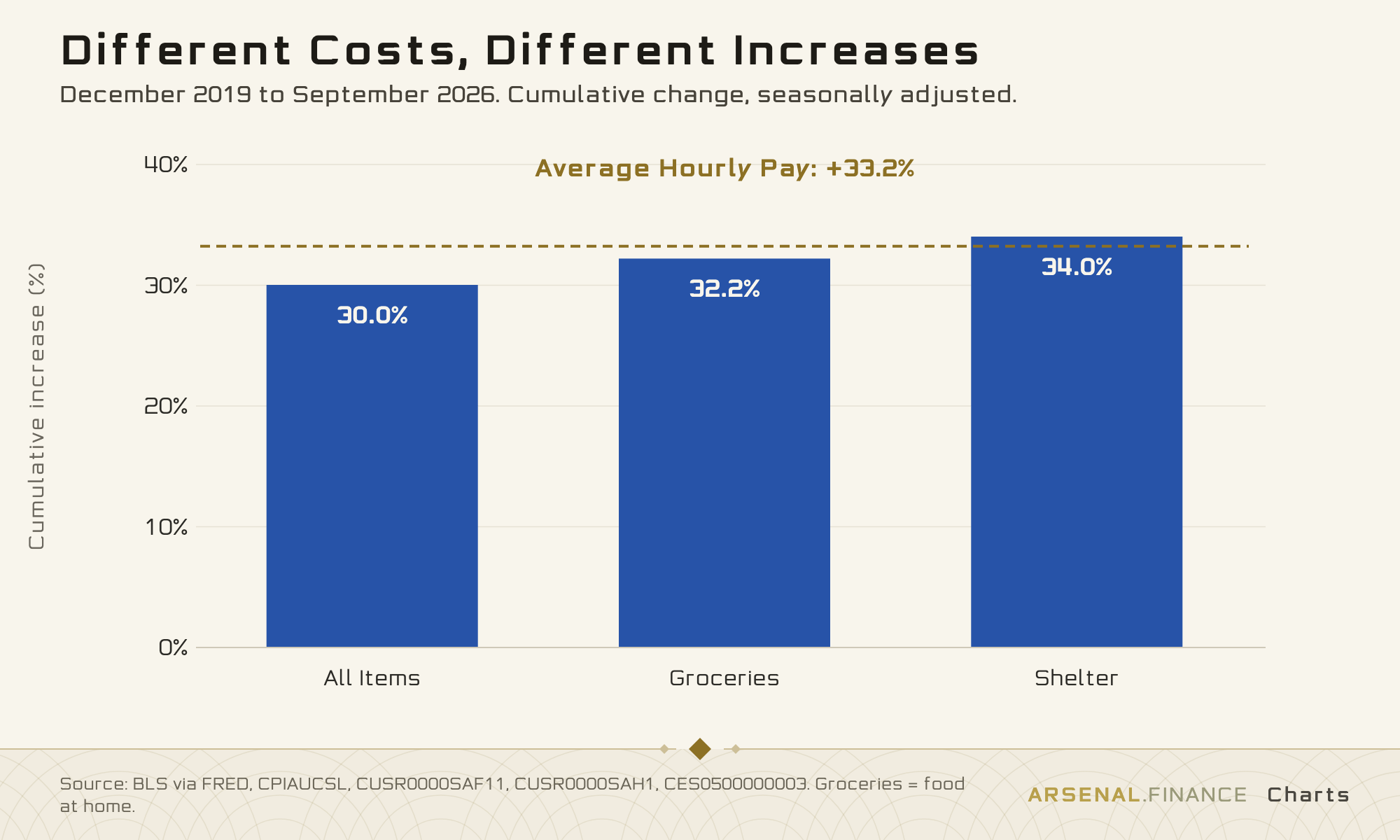
Shelter here measures rent and the rental value of owned homes, not home prices or mortgage payments. Someone with a fixed mortgage and someone signing a new lease can have very different experiences. Your hours, taxes and spending habits matter too.
The average is useful, but it isn’t your budget. A 2.5% gain in buying power over nearly seven years is much less impressive than a 33% raise. Lower inflation won’t bring old prices back; income has to grow faster than costs to make further progress.
The same goes for your portfolio. Account for inflation, deposits and withdrawals before treating a bigger balance as a gain.
To follow inflation and other economic data, go here: https://arsenal.finance/economy
Thanks for reading! Subscribe for free to receive new posts and support my work.
Disclaimer: The information above provided by Arsenal.Finance is for educational and informational purposes only and should not be construed as investment, financial, or legal advice. I am not a financial advisor. All investments involve risk, and the past performance of a security or financial product does not guarantee future results or returns. Always conduct your own research or consult with a professional before making any financial decisions.
Sources
BLS average hourly earnings, total private; BLS Consumer Price Index, all items; BLS CPI, food at home; BLS CPI, shelter; BLS explanation of pandemic effects on average earnings; BLS CPI questions and answers; BLS rent and rental equivalence methodology; BLS Employment Cost Index methodology; BLS private-industry wages by occupation, June 2026; ECI wages: management, professional and related; ECI wages: sales and office; ECI wages: natural resources, construction and maintenance; ECI wages: production, transportation and material moving; BLS all-items CPI, not seasonally adjusted